

Audit cost for seo in 2026: pricing ranges, what’s included, and how to choose the right scope
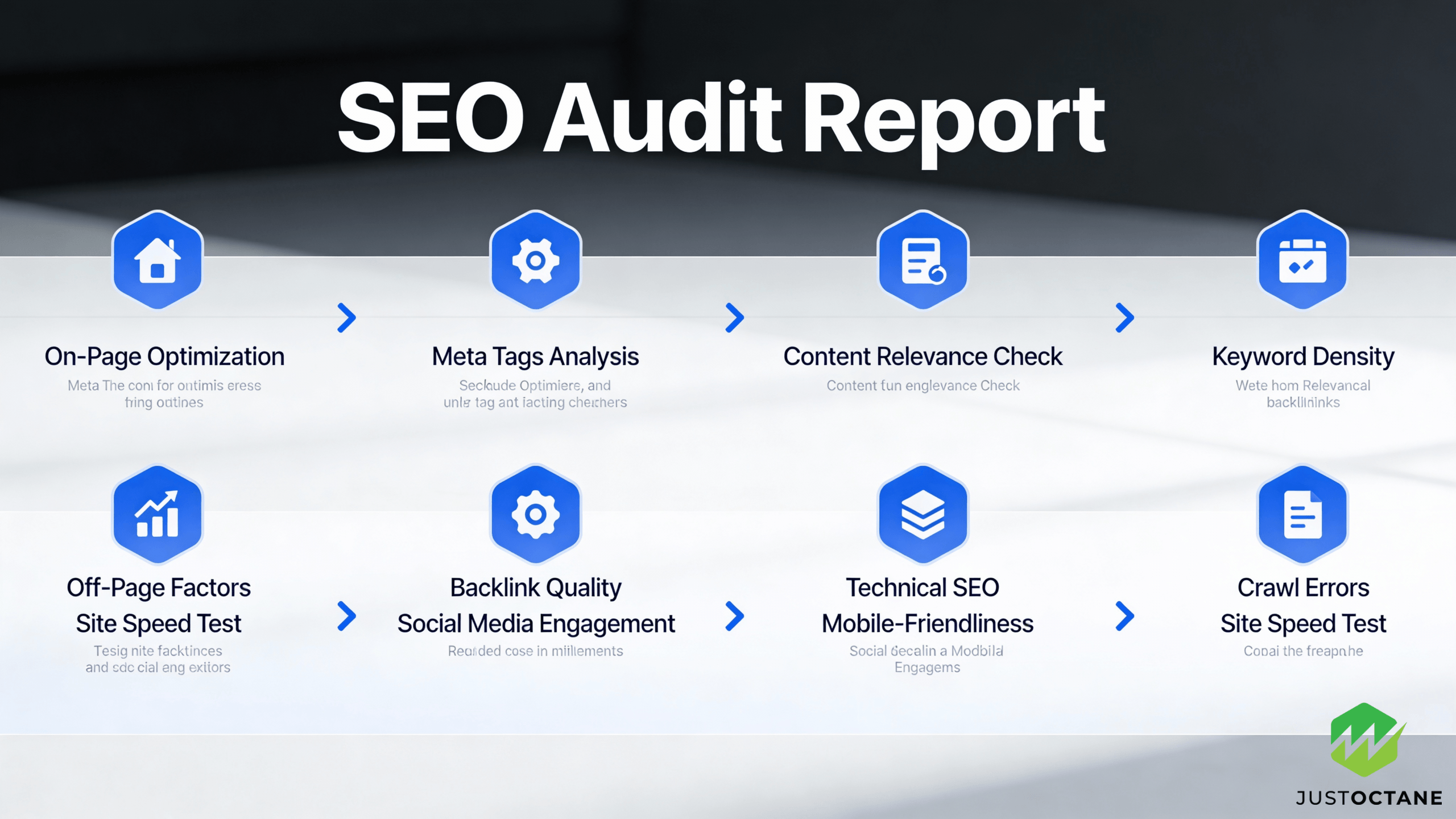
An SEO audit is a structured review of how well your website can earn visibility in search engines as part of your broader digital marketing strategy. A good audit goes beyond “tool screenshots” and explains what’s wrong, why it matters, and what to do next—across technical SEO, on-page SEO (content), and off-page signals like backlinks.
In 2026, SEO audit pricing can be anywhere from free (automated site audits) to $25,000+ for complex, enterprise work. Most businesses land somewhere in the middle, depending on site size, goals, turnaround time, and whether you want implementation support to improve search rankings.
Contents
- 1 SEO audit pricing ranges (realistic tiers)
- 2 How to sanity-check an SEO audit quote
- 3 9 factors that determine SEO audit cost
- 3.1 1) Number of pages (and how many templates power them)
- 3.2 2) Technical complexity (CMS, rendering, and crawl behavior)
- 3.3 3) Scope: technical SEO audit vs content audit vs backlink audit
- 3.4 4) Competitive analysis and SERP review depth
- 3.5 5) Data access and analytics quality
- 3.6 6) Turnaround time
- 3.7 7) Deliverables and stakeholder needs
- 3.8 8) Industry risk and link profile history
- 3.9 9) Whether you want implementation support (SEO services after the audit)
- 4 What a comprehensive SEO audit should include
- 4.1 Technical SEO audit: crawlability, indexation, and performance
- 4.2 On-page SEO and content audit: intent, quality, and topical coverage
- 4.3 Off-page / link audit: backlink quality, risk, and opportunity
- 4.4 Competitive analysis: why others outrank you
- 4.5 User experience and engagement signals (often overlooked)
- 5 Pricing models: hourly vs project-based vs retainer
- 6 How long an SEO audit takes (and how often to do SEO audits)
- 7 How to reduce SEO audit costs without reducing quality
- 8 Access and privacy: keep the audit safe and efficient
- 9 Make the audit usable: turn findings into an implementation backlog
- 10 What to do after the audit report
- 11 Quick answers before you buy
- 12 5 research‑backed SEO questions and answers
- 12.1 1. What core components should an evidence‑based SEO audit include?
- 12.2 2. How long does a proper SEO audit take, and what affects that timeline?
- 12.3 3. What measurable impact can audit‑driven technical fixes have on traffic and rankings?
- 12.4 4. Which KPIs should I track to evaluate the effectiveness of an audit and how soon will they move?
- 12.5 5. Which tools and validated methods produce the most reproducible audit results?
SEO audit pricing ranges (realistic tiers)
There isn’t one universal “price tag” because an audit can be a lightweight review or a full diagnostic that touches engineering, analytics, and content strategy. This table shows common ranges you’ll see from an SEO consultant or SEO agency.
| Tier | Typical cost | Best fit | What you usually receive |
|---|---|---|---|
| Tool-based / free audit | $0 | Quick triage before you invest | A short report from an SEO platform; limited prioritization |
| Basic professional audit | $300–$1,500 | Small sites, local SEO, early-stage businesses | Core technical + on-page findings, a short roadmap, and a call to review |
| Mid-market audit | $1,500–$6,000 | Growing companies that need clearer priorities | Deeper crawling, a content audit sample, competitive analysis, and stronger implementation guidance |
| Enterprise / complex audit | $6,000–$25,000+ | Large ecommerce, marketplaces, SaaS with multiple product areas, publishers/news sites, or multi-domain brands | Multi-template analysis, advanced technical SEO audit work (often including JavaScript and international), stakeholder workshops, and an implementation-ready plan |
As a rule: the more your site behaves like software (many templates, filters, faceted navigation, multiple environments), the more the audit behaves like an engineering project—and the more it costs.
How to sanity-check an SEO audit quote
Even when an audit is priced as a fixed project, the math underneath is usually time × rate. If you’re comparing providers, ask two simple questions: (1) how many hours are estimated, and (2) who is actually doing the work (senior strategist vs analyst). A mid-market audit often takes 30–50 hours once you include crawling, Search Console review, content sampling, backlink analysis, competitive analysis, and a final workshop.
Also confirm what format you’ll receive. The most useful audits include an audit report plus a spreadsheet (or board) that groups issues by template and includes priority, effort, and how to validate the fix. If the quote can’t describe that level of detail, you may be paying mostly for a PDF.
Finally, separate audit cost from implementation cost. It’s normal for implementation (especially performance work) to cost more than the audit, because it requires development time and QA.
9 factors that determine SEO audit cost
1) Number of pages (and how many templates power them)
Auditing 50 URLs is different from auditing 50,000. But template count often matters more than raw URL count. If a site has five key templates, one fix can improve thousands of pages—so a high-quality audit spends time identifying patterns, not manually reviewing every URL.
2) Technical complexity (CMS, rendering, and crawl behavior)
Costs rise when your platform creates edge cases: heavy JavaScript rendering, dynamic parameters, multiple subdomains, or complicated indexation rules. If you need log-based validation or you’ve had indexing problems, expect more time spent on crawling, testing, and reproducing issues.
3) Scope: technical SEO audit vs content audit vs backlink audit
Some “SEO audits” focus on a single area. A full-scope audit usually includes a technical SEO audit, an on-page/content audit, and an off-page review (link audit/backlink audit). The broader the scope, the more specialist time is required.
4) Competitive analysis and SERP review depth
Many businesses want to know why competitors win in the SERPs. That requires more than looking at search engine rankings; it means comparing page intent, content depth, internal linking, and backlink profiles—then translating that into actions that fit your brand and resources.
5) Data access and analytics quality
If tracking is messy, the auditor spends extra time validating what “success” means. Read-only access to Google Search Console and your analytics (ideally GA4) helps tie recommendations to organic traffic, leads, and revenue instead of guessing.
6) Turnaround time
A 7–10 day turnaround often costs more than a 30-day timeline because it requires a tighter schedule, fewer revisions, and more concentrated senior time. If you’re budgeting, align urgency with business impact.
7) Deliverables and stakeholder needs
A founder may want a concise audit report and a prioritized plan. A larger organization may need a deck for executives, a spreadsheet for analysts, and detailed notes for developers and writers. Multiple deliverable formats add production time.
8) Industry risk and link profile history
Sites with past penalties, spam, or aggressive link building can require deeper backlink sampling and risk assessment. In regulated industries, the audit may also need extra review for compliance constraints.
9) Whether you want implementation support (SEO services after the audit)
An audit is diagnosis. Fixing issues is a separate (often larger) effort. Some providers offer project-based implementation or an ongoing retainer, which changes the total cost of ownership even if the audit fee looks similar.
What a comprehensive SEO audit should include
Technical SEO audit: crawlability, indexation, and performance
This is the “can search engines access and trust the site?” layer. A good technical section typically reviews site architecture, internal linking, status codes, redirects, duplicate URLs, canonicals, robots.txt rules, XML sitemaps, schema/structured data, and (when relevant) hreflang for international targeting. Crawling tools like Screaming Frog or Sitebulb can surface patterns quickly, but the value comes from interpreting what to fix first.
If speed and UX are part of your scope, align diagnostics with “Web Vitals” and validate findings with tools such as PageSpeed Insights and Lighthouse. This is often where audits get expensive, because fixes can involve development, design, and infrastructure.
On-page SEO and content audit: intent, quality, and topical coverage
A useful content audit doesn’t just count keywords—it checks whether each important page satisfies search intent and whether your content supports a coherent SEO strategy. Common issues include thin pages, overlapping pages (cannibalization), outdated information, weak internal linking, and mismatched intent.
For baseline expectations around crawlable, helpful content, it’s worth reviewing Googles “Search Engine Optimization (SEO) Starter Guide”. Strong audits also evaluate credibility signals (clear authorship, sourcing, and first-hand experience) because quality and trust increasingly influence performance.
Off-page / link audit: backlink quality, risk, and opportunity
Link reviews look at relevance, authority, anchor text patterns, and the overall health of your link profile. Many auditors use tools like Ahrefs or Semrush to identify suspicious domains, lost links, and competitor gaps. The output should clarify whether you have a true risk problem, a true authority problem, or both.
Competitive analysis: why others outrank you
Competitive analysis connects the dots between competitor content, technical execution, and marketing. A strong audit calls out what competitors do differently (topic coverage, page structure, internal links, link acquisition, UX) and what is realistically achievable for your team.
User experience and engagement signals (often overlooked)
While SEO is not identical to conversion optimization, an audit should still flag friction that suppresses performance: slow mobile layouts, intrusive interstitials, confusing navigation, or pages that don’t help users complete key actions. When possible, recommendations should tie back to measurable KPIs like conversions from organic traffic, not just “engine rankings.”
Pricing models: hourly vs project-based vs retainer
When you compare proposals, look for a clear scope of work and clear deliverables, not just a dollar amount.
Hourly pricing is common for advisory work, second opinions, or small audits. It can be efficient when you have a focused question (for example, “why did traffic drop after a migration?”) but it’s harder to budget if the scope isn’t controlled.
Project-based audit pricing is the most common option for a defined audit report. It’s easier to compare vendors because timelines, outputs, and assumptions should be explicit.
Retainer pricing makes sense when the audit is the first phase of ongoing SEO services. In practice, many companies pay for an initial audit and then keep the same team on a monthly retainer to implement technical fixes, content updates, and link building.
How long an SEO audit takes (and how often to do SEO audits)
Turnaround time depends on size and complexity. A small local business site might be audited in a week or two. A mid-size ecommerce site may take 2–4 weeks. Enterprise site audits (especially with multiple stakeholders and templates) can take 4–8+ weeks.
As for frequency: many businesses do a full audit annually or bi-annually, then run smaller “site audits” quarterly (or after major releases). If you publish often (ecommerce, news, or large blogs), lightweight checks on indexation, performance, and internal linking can prevent issues from compounding.
However, audits for Google Maps tend to be quicker!
How to reduce SEO audit costs without reducing quality
The fastest way to waste money is to force the auditor to guess. A little preparation keeps the project efficient.
- Share goals and KPIs up front (leads, revenue, sign-ups, calls) and the pages that matter most.
- Provide read-only access to Google Search Console, GA4 (or equivalent analytics), and your CMS where possible.
- List recent changes (migrations, redesigns, tracking updates, domain moves) so the auditor can focus on the right root causes.
- Agree on what’s in-scope (technical, content, backlinks, competitors) and what is explicitly out-of-scope.
Access and privacy: keep the audit safe and efficient
If your site has sensitive data, you can still run a strong audit without oversharing. Use least-privilege access (read-only Search Console and analytics), time-box any temporary credentials, and prefer exports for sensitive sources (for example, server logs or customer data). Agree up front on where files will be stored and how long the auditor retains them.
Make the audit usable: turn findings into an implementation backlog
One of the biggest differences between a cheap audit and a high-value audit is whether your team can actually execute it. Ask for recommendations that translate into work items your developers and content team can ship.
In practice, that means your deliverables should include a prioritized backlog (often in a spreadsheet or directly in Jira/Asana/Trello) where each item has: the affected templates or URL examples, the SEO impact, the effort estimate, and clear acceptance criteria (what “fixed” looks like and how to verify it).
This also improves ROI measurement. If the audit includes a simple measurement plan—what to annotate, what to monitor in Search Console, and which GA4 events or conversions to watch—you can prove whether fixes moved the needle on organic traffic and leads instead of debating opinions.
What to do after the audit report
To get results, treat the audit like a roadmap. A simple execution path is: (1) fix crawl/index blockers first, (2) improve the highest-impact templates and internal linking, (3) update or consolidate content that misses intent, then (4) re-crawl and re-measure. If you keep a release log and review Search Console + GA4 weekly for 4–8 weeks after major fixes, you’ll learn quickly what actually improves organic traffic, leads, and search engine rankings.
Quick answers before you buy
Are free SEO audits worth it?
They’re useful for identifying obvious issues and starting internal conversations, but they rarely provide enough context to act confidently. If the output is mostly automated warnings, treat it as a checklist—not a strategy.
Should you hire an agency, an in-house team, or an SEO consultant?
An SEO consultant can be ideal when you need senior expertise and already have people to implement. An SEO agency or marketing agency is often better when you also need execution (content production, technical support, or ongoing SEO services). In-house is best when SEO is a core growth channel and you can support continuous auditing and improvements.
What’s the biggest red flag in an SEO audit proposal?
Vague deliverables. If the proposal can’t define what you will receive (audit report format, competitive analysis depth, link audit methodology, timeline, number of review calls), it’s hard to judge value—regardless of price.
5 research‑backed SEO questions and answers
1. What core components should an evidence‑based SEO audit include?
An audit that follows best‑practice, research‑backed methodology reviews at least five pillars:
- Technical SEO — crawlability, indexability, hreflang, canonicalization, structured data (see Google Search Central documentation on indexing and crawling).
- Performance & UX — Core Web Vitals, mobile performance, and page speed metrics that Google uses in ranking signals (see web.dev / Core Web Vitals).
- Content quality — topical relevance, intent match, and content completeness compared against high‑ranking pages (studies show content relevance and depth correlate with rankings; see Backlinko ranking factors research).
- Backlink profile & authority — quantity and quality of referring domains, anchor diversity and spam signals (backlink metrics remain a strong correlate of ranking in empirical studies).
- Measurement & analytics — Search Console coverage, server logs and analytics to verify indexation, impressions, clicks and technical errors over time.
Combining these pillars with log‑file analysis and prioritized remediation (technical fixes first, then content and links) is the evidence‑based approach recommended by practitioners and platform vendors.
2. How long does a proper SEO audit take, and what affects that timeline?
Typical timelines vary by site size and complexity:
- Small sites (under ~500 pages): 3–7 business days for a full technical + content audit.
- Medium sites (500–10,000 pages): 1–3 weeks to crawl, analyze logs, and prioritize fixes.
- Large sites (10k+ pages or enterprise architectures): multiple weeks to months, because of sampling, staged testing and stakeholder coordination.
Key drivers of duration are crawl time (number of URLs), availability and size of server logs, the need for manual content review, and whether separate environments or teams must be involved for remediation and testing. Industry analyses and tooling guides report the above ranges as common in practice.
3. What measurable impact can audit‑driven technical fixes have on traffic and rankings?
Research and field studies show technical fixes can produce measurable uplifts, often faster than content or link campaigns, when the root problem is indexation or crawlability:
- Fixing indexation, canonical and robots issues can restore previously lost organic impressions and clicks within days to weeks (Google Search Central guidance and multiple case studies support quick recovery when indexing was the bottleneck).
- Improving page speed and Core Web Vitals can reduce bounce and improve rankings for borderline pages; Google has confirmed page experience is a ranking factor and web.dev documents the metrics to monitor.
- Empirical analyses (e.g., large crawls and content studies) show the majority of pages receive little or no organic traffic—remediating technical barriers is often a prerequisite to unlocking any subsequent content or link gains (see Ahrefs analysis on pages that get no organic traffic).
Magnitude and timing of gains depend on the scale of the issue and search demand; expect some improvements in days/weeks for technical fixes and broader ranking changes over months.
4. Which KPIs should I track to evaluate the effectiveness of an audit and how soon will they move?
Track a mix of technical, behavioral and outcome KPIs. Typical timelines for observable movement are noted:
- Technical KPIs (days–weeks): crawl errors, index coverage, server response codes, number of accessible URLs — these should improve immediately after fixes; verify via Google Search Console and log files.
- Performance KPIs (days–weeks): Core Web Vitals (LCP, FID/INP, CLS) and page load times — measurable in real user metrics (CrUX) and lab tests (Lighthouse/PageSpeed).
- Search KPIs (weeks–months): impressions, clicks, average position — ranking and traffic typically move more slowly as search algorithms re‑evaluate pages and searcher behavior adjusts.
- Business KPIs (months): organic conversions and revenue — these depend on traffic quality and funnel optimisation and usually solidify over several months after traffic changes.
5. Which tools and validated methods produce the most reproducible audit results?
Use a combination of vendor and open tools plus controlled testing:
- Canonical tools for diagnostics: Google Search Console (index/coverage), PageSpeed Insights / Lighthouse (performance), CrUX for real user metrics, and server log analyzers for true crawl behaviour.
- Crawling & on‑page analysis: Screaming Frog or Sitebulb for comprehensive site crawls; Ahrefs, SEMrush or Moz for backlink and keyword data (each has strengths; cross‑check results).
- Controlled validation: SEO A/B or split testing platforms (e.g., SearchPilot examples, or methodical experiments using staging + monitoring) to prove causation rather than correlation.
- Methodology: start with hypothesis (e.g., “canonical errors are causing X% of pages to be excluded”), run diagnostics (crawl + logs + GSC), fix prioritized issues, then measure via predefined KPIs over agreed windows.