

seo evolution: from keyword stuffing to AI machine learning search (and a practical roadmap for businesses)
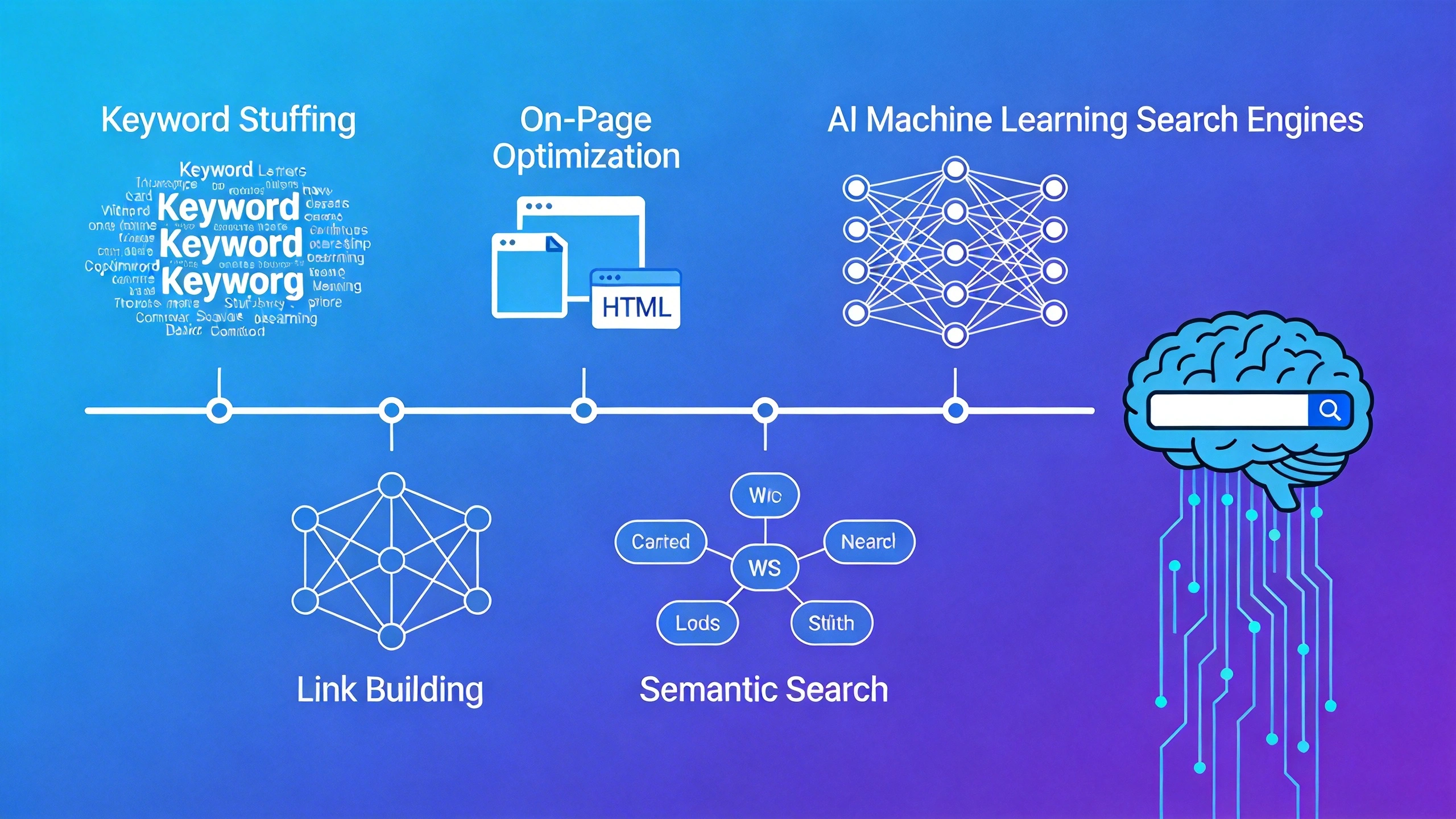
Search has changed fast: search engines reward better user experience, higher quality pages, and clearer intent alignment than ever. This history search engine optimization guide walks through key milestones and explains what the evolution of SEO means for your website, your rankings, and your marketing pipeline—plus how JustOctane can turn modern SEO work into measurable leads.
Contents
- 1 What SEO is (and why it keeps changing)
- 2 The early era: meta tags, directories, and the “wild west”
- 3 Google, links, and why link building became a cornerstone
- 4 Algorithm updates: from Panda and Penguin to intent-first ranking
- 5 Semantic search, machine learning, and artificial intelligence
- 6 Mobile, technical foundations, and prioritizing user experience
- 7 How search results expanded: social media, voice search, video, and more
- 8 What to do now: a modern SEO system you can measure
- 9 Turning SEO into a lead generator (not just higher rankings)
- 10 The next frontier: AI answers, brand trust, and durable growth
What SEO is (and why it keeps changing)
At its core, SEO is website optimization for search engine results. But search algorithms, algorithm updates, and shifting user behavior force SEO teams to adapt, because algorithms search engines rely on are designed to surface more relevant search results for users. If you only chase one keyword or one ranking factor, you can still rank higher, but you’re unlikely to keep higher search results over time.
In other words, to borrow a common summary, “SEO undergone significant shifts”: engines have moved from simple matching to semantic interpretation, machine learning, and artificial intelligence AI systems that evaluate context, engagement, and usefulness across sites.
In the early days of the web, website owners relied on meta tags, basic on-page signals, and heavy keywords usage. It was a wild west where old SEO tactics like SEO keyword stuffing and keyword density manipulation could push pages up in search results—especially on Yahoo and other early search engines Yahoo helped popularize.
It’s fair to say “SEO come long way” since then. As more websites entered the index, quality dropped, spam rose, and search engines began prioritizing signals that could better predict user satisfaction.
Google, links, and why link building became a cornerstone
Google changed search engine rankings by treating links as signals of authority. The foundational google pagerank algorithm era is well captured in “The Anatomy of a Large-Scale Hypertextual Web Search Engine”. As Google’s approach matured, link building shifted from raw volume to earning trustworthy backlinks from relevant websites.
Today, the best link strategy still supports search optimization: build genuinely useful assets, earn mentions, and avoid link farms that can create long-term ranking risk.
Algorithm updates: from Panda and Penguin to intent-first ranking
As the web expanded, algorithm updates pushed SEO away from shortcuts. Updates Panda Penguin targeted low-quality content and manipulative links, and panda penguin became shorthand for a new standard: pages must be useful, credible, and written for users, not just engines.
These updates also accelerated the importance of understanding user intent. When a search query is informational, commercial, or local, the best pages match that intent with the right format, depth, and internal links.
Semantic search, machine learning, and artificial intelligence
Modern SEO has to understand context intent, because search engines using machine learning can interpret meaning beyond exact keywords. This is why search engines understand synonyms, entities, and topical relationships—and why relevant is now more about comprehension than repetition.
One milestone in natural language processing is BERT, documented in “BERT: Pre-training of Deep Bidirectional Transformers for Language Understanding”. In practice, artificial intelligence AI makes it harder to game rankings and easier to reward pages that genuinely help users complete a task.
Put simply: engine optimization SEO is no longer about tricks; it’s about building pages that satisfy search engines SEO requirements by satisfying people.
Mobile, technical foundations, and prioritizing user experience
As mobile usage surged, mobile optimization became mandatory. Technical SEO now includes crawlability, internal linking, indexing control, and performance work that improves user experience UX. Prioritizing user experience means fast load times, clean templates, and fewer technical errors that block engines from rendering pages.
This is where optimisation (and optimization) meet execution: site architecture, structured data, and ongoing fixes that keep the website healthy as updates roll out. Today, rankings user experience signals and technical health go hand in hand—and that’s a major reason why “quick” fixes often fail.
To keep technical work tied to business outcomes, JustOctane also looks beyond surface-level audits and into issues that competitors rarely document, like index bloat, JavaScript rendering risk, crawl budget constraints, and how internal links distribute authority across pages.
Search is no longer ten blue links. Social media influences discovery, social signals can amplify brand awareness, and video results often compete with traditional pages. Voice search and new interfaces also change how users phrase search queries, which affects content structure and on-page wording.
Because the engine keeps evolving, the best strategy is to treat SEO as part of a broader marketing system: content, PR, and conversion improvements working together.
What to do now: a modern SEO system you can measure
If you want to rank higher search consistently, focus on repeatable processes instead of one-off tactics. At JustOctane, we typically build an evolution SEO roadmap that connects technical work, content, and links to business outcomes.
Most businesses need four foundations. Keep them simple, then get relentless about execution:
- Technical: fix crawl and indexing waste, improve core templates, and resolve issues that suppress visibility.
- Content: map topics to intent, publish or refresh high-quality pages, and avoid thin content that drags down quality signals.
- Authority: earn relevant links, clean up risky profiles, and support sustainable link building.
- Measurement: track rankings, leads, and assisted conversions—so optimization SEO efforts are tied to revenue, not vanity metrics.
When you combine this with clear positioning and strong user experience, you build a site that can withstand google algorithm changes and keep winning in competitive search engine results.
Turning SEO into a lead generator (not just higher rankings)
Many businesses stop at traffic. The teams that grow treat search as a full-funnel system: research the search queries real buyers use, publish pages that answer the question and remove objections, then route conversions to the right sales follow-up.
This is where a lot of SEO campaigns break down: they celebrate rankings, but they don’t improve the experience that turns users into customers. JustOctane closes that gap by aligning content strategy, conversion rate improvements, and technical fixes—so your website becomes a reliable source of qualified leads.
It also changes how you prioritize: instead of chasing every update headline, you invest in pages that support revenue, keep content accurate, and build long-term trust with users and search engines.
The next frontier: AI answers, brand trust, and durable growth
The industry mantra is “SEO continue evolve,” and AI changes how results are presented, including summaries and answer-style experiences. That doesn’t make SEO search obsolete—it raises the bar. Businesses that invest in expertise, transparent sourcing, and real product or service proof are more likely to appear in search engine results and be chosen by users.
A practical way to future-proof content is to make it easy for both users and engines to extract meaning: lead with direct answers, support claims with citations or first-hand data, keep terminology consistent, and update pages when facts change. This helps search engines SEO systems recognize quality while also improving conversion behavior.
In practice, the future of search engine optimisation will reward clear claims backed by evidence, content that solves real problems end-to-end, and technical foundations that let engines interpret your site quickly.
If you want a roadmap built around your industry, your search rankings, and your sales process, talk with JustOctane. We’ll audit your site, identify the highest-impact updates, and help you turn search traffic into leads—without relying on spam or keyword stuffing.